
Understanding BMI: How to Calculate BMI and it's Benefits and Limitations
- LD
- Feb 23
- 4 min read
Updated: Mar 12
Body Mass Index, or BMI, is a widely used tool to assess whether a person has a healthy body weight for their height. Despite its popularity, many people do not fully understand what BMI measures, or the strengths and weaknesses of using it as a health indicator.

What Is BMI?
BMI stands for Body Mass Index. It is a number calculated from a person’s weight and height that helps categorise individuals into different weight ranges. These categories include underweight, normal weight, overweight, and obesity. The idea behind BMI is to provide a simple way to estimate whether a person’s weight might put them at risk for health problems related to being too thin or too heavy.
Research shows that individuals in higher BMI categories have increased risk for:
Cardiovascular disease
Type 2 diabetes
High blood pressure
Certain cancers
Joint problems
Individuals with very low BMI may be associated with:
Nutritional deficiencies
Hormonal imbalances
Bone density loss
BMI does not diagnose health conditions, but it can signal when further evaluation may be needed.
How to Calculate BMI
Calculating BMI is straightforward and requires only two pieces of information: your weight and height. The formula differs slightly depending on the units used.

Metric Units
If you use kilograms (kg) for weight and metres (m) for height, the formula is:
BMI = weight (kg) ÷ (height (m))²
For example, if you weigh 70 kg and are 1.75 metres tall, your BMI would be:
BMI = 70 ÷ (1.75 × 1.75) = 70 ÷ 3.06 ≈ 22.9
Imperial Units
If you use pounds (lbs) for weight and inches (in) for height, the formula is:
BMI = (weight (lbs) ÷ (height (in))²) × 703
For example, if you weigh 154 lbs and are 69 inches tall, your BMI would be:
BMI = (154 ÷ (69 × 69)) × 703 = (154 ÷ 4761) × 703 ≈ 22.7
BMI Categories
Once you have your BMI number, you can compare it to standard categories used by health organisations:
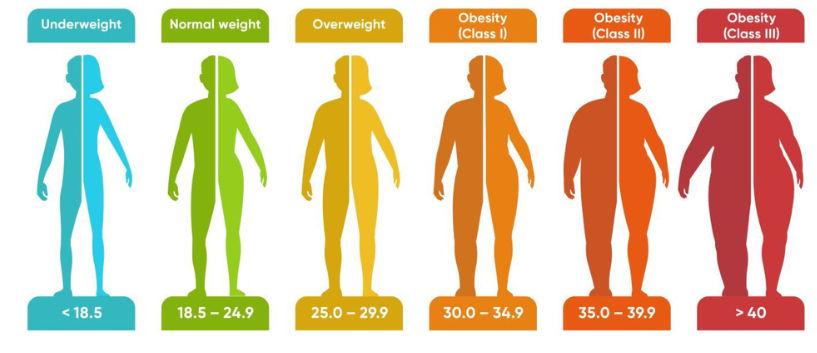
Underweight: BMI less than 18.5
Normal weight: BMI 18.5 to 24.9
Overweight: BMI 25 to 29.9
Obesity: BMI 30 or higher
These categories help identify potential health risks related to body weight.
Benefits of Using BMI
BMI offers several advantages that explain its widespread use in health assessments.
Easy to Calculate
BMI requires only basic measurements of height and weight, which are easy to obtain without specialised equipment. This simplicity makes it accessible for individuals, healthcare providers, and researchers.
Quick Screening Tool
BMI provides a quick way to screen large populations for weight-related health risks. It helps identify individuals who may need further evaluation or lifestyle changes to improve their health.
Useful for Tracking Trends
Healthcare professionals use BMI to monitor trends in weight status over time, both for individuals and populations. This can help track the effectiveness of public health interventions or personal health plans.
Limitations of BMI
While BMI is useful, it has important limitations that can affect its accuracy and usefulness in some cases.
Does Not Measure Body Fat Directly
BMI calculates a ratio of weight to height but does not distinguish between fat, muscle, bone, or water weight. For example, a muscular athlete may have a high BMI but low body fat.
Can Misclassify Individuals
Because it does not account for body composition, BMI can misclassify people. Older adults with muscle loss may have a normal BMI but higher body fat.
Does Not Reflect Fat Distribution
Health risks depend not only on how much fat a person has but also where it is located. Abdominal fat, for example, poses higher health risks than fat in other areas. BMI does not provide information about fat distribution.
Limited Use for Certain Groups
BMI is less accurate for children, pregnant women, athletes, and elderly people.
Examples of BMI Misclassification
Example: Athlete Misclassification
A 28-year-old male bodybuilder weighs 90 kg and is 1.80 meters tall. His BMI is:
90 ÷ (1.80 × 1.80) = 90 ÷ 3.24 ≈ 27.8
This BMI falls in the overweight category, but because of his high muscle mass, his body fat percentage is low. BMI alone would not accurately reflect his health status.
Example: Elderly Person
A 70-year-old woman weighs 60 kg and is 1.60 meters tall. Her BMI is:
60 ÷ (1.60 × 1.60) = 60 ÷ 2.56 ≈ 23.4
This is in the normal range, but if she has lost muscle mass with age, her body fat might be higher than BMI suggests. Additional assessments could provide a clearer picture.
Alternatives and Complementary Measures
Because of its limitations, BMI is often used alongside other measurements to assess health more accurately.
Waist circumference measures abdominal fat and helps identify risk for heart disease and diabetes.
Body fat percentage can be measured using skinfold calipers, bioelectrical impedance, or DEXA scans.
Waist-to-hip ratio compares waist size to hip size to assess fat distribution.
Clinical assessments consider medical history, lifestyle, and other risk factors.
BMI is a useful starting point for understanding weight-related health risks but should not be the only measure you rely on.
How to Use BMI Wisely
Knowing your BMI can be a helpful starting point in understanding your health but it should not be the only measure you rely on. It is only one piece of the bigger picture.
If you have questions about your BMI or what it means for your health, you should speak with a qualified healthcare professional. A doctor can interpret your BMI in the context of your full medical history and overall health profile.
Summary
BMI is a simple and widely used tool to estimate whether a person’s weight is healthy for their height. It helps categorise individuals into underweight, normal weight, overweight, and obesity groups. Calculating BMI requires only weight and height, making it accessible and easy to use.
However, BMI does not measure body fat directly and can misclassify people with high muscle mass or different body compositions. It also does not reflect fat distribution, which affects health risks.
If you have questions about your BMI or what it means for your health, you should speak with a qualified healthcare professional. A doctor can interpret your BMI in the context of your full medical history and overall health profile.
Always consult with a doctor or healthcare professional before starting new exercise or altering your diet to ensure it is suitable for you.

Comments